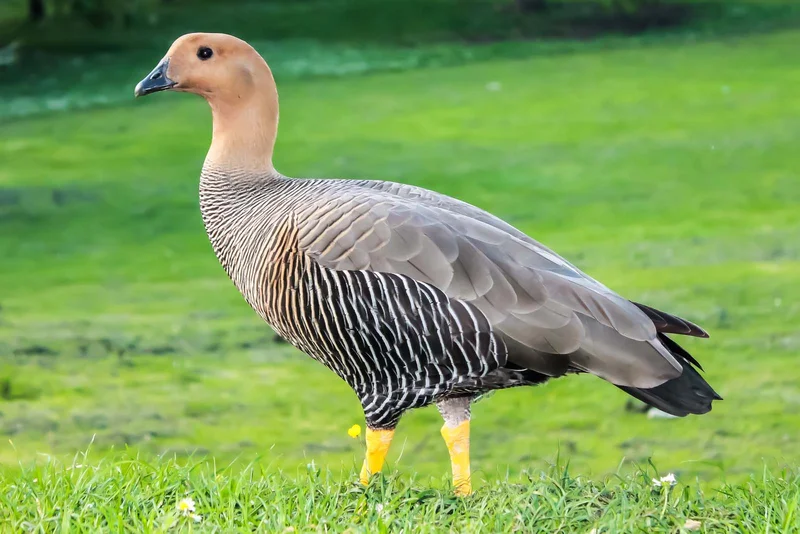
The Upland Goose is a common and iconic bird on the Falkland Islands, with a population of around 120,000 individuals. Preferring short grass for grazing, this bird has adapted well to the agricultural landscape of the islands, especially sheep farming.
Physical Characteristics
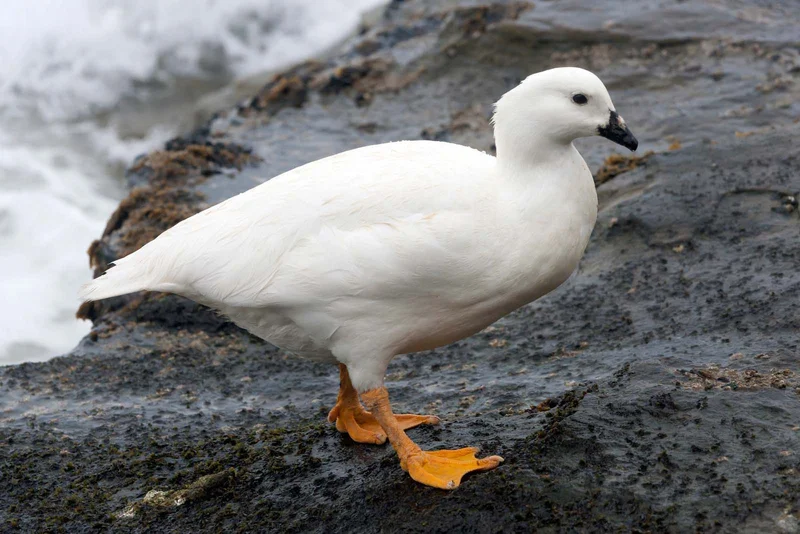
Male Upland Geese are more visually striking, with a white head and breast and darker gray wings and back. Females are often confused with the ruddy-headed goose due to their similar coloration, but Upland Geese females can be distinguished by more pronounced striping on their breast and wings.
Habitat and Nesting
While they prefer short grass for feeding, Upland Geese require long grass for nesting. They build nests in tall tufts of grass, lining them with feathers and plant material. Females typically lay 5 to 8 eggs between September and October, and the chicks become independent by January or February.
Conservation and Population
Despite high chick mortality due to predation from seabirds and native birds of prey, the Upland Goose population is thriving on the Falklands. Conservation efforts and eco-tourism promoting native grassland preservation have also benefited this species. Additionally, there is an introduced population of Upland Geese on South Georgia Island.
Interesting Facts
- Common Sight: With around 120,000 individuals, the Upland Goose is one of the most commonly spotted birds in the Falklands.
- Nesting Habits: They prefer long grass for nesting, hiding their eggs within tufts of grass.
- High Chick Mortality: Despite high predation rates, the species remains abundant on the islands.