
Crossing the Drake Passage to Antarctica (and Realizing It’s Not Always Scary) | Travel Blog
The first thing you notice when the ship noses away from Ushuaia isn’t fear. It’s smell. Diesel and old rope, coffee that’s been sitting on a burner too long, the faint medicinal tang of seasickness tablets being unwrapped too early. People expect hysteria, white knuckles, waves like walls. Mostly, it’s waiting. Waiting for your inner ear to decide whether today is the day it betrays you.
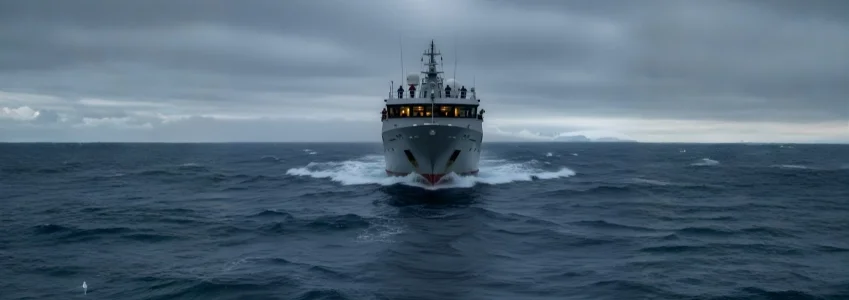
The Drake Passage has a reputation that travels faster than the water itself. Videos circulate of passengers pinballing down corridors, plates skittering, bodies pressed against railings as if magnetized by survival instinct. What rarely makes the cut is the sound of it when it’s calm: a low, steady hush against the hull, like someone exhaling through teeth. Or the feel of it, just enough motion to make your calves tense, your stomach pay attention, but not enough to justify the drama.
Table of contents
What the Drake Actually Is
The Drake is not a single monster, but a stretch of water roughly 500 miles wide where two oceans exchange grudges. It sits between the ragged end of South America and the blunt edge of the Antarctic Peninsula, narrow enough that currents pile up instead of slipping past each other. The result can be chaos, or it can be something closer to boredom with a pulse. The air tastes metallic down here, colder than you expect, and even on a mild crossing there’s a constant vibration through the soles of your feet.
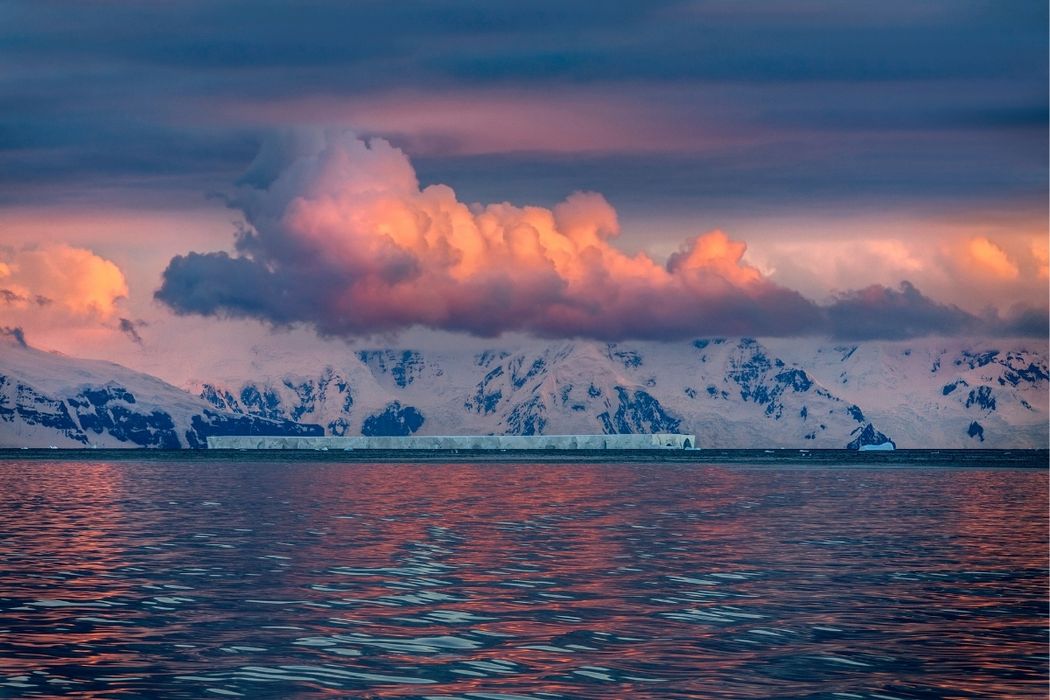
Its fame comes from convergence: Atlantic meeting Pacific, weather systems colliding with nothing in their way. Sailors give it nicknames because humans like to domesticate fear with language. A smooth crossing becomes the “Drake Lake,” a restless one the “Drake Shake.” Onboard, the terms are said with a shrug, over soup that sloshes just enough to keep you from trusting it. The ship creaks, not dramatically, but persistently, like a house settling in winter.
Why People Make Such a Big Deal Out of It
Part of the anxiety is inherited. You arrive with other people’s stories lodged in your head, along with the taste of ginger candies you don’t normally eat. Social media amplifies the worst hours of the worst days, stripped of context and patience. What it doesn’t show is the quiet camaraderie of a lounge full of strangers lying sideways, trading nods, listening to cutlery clink in the galley below. Discomfort becomes communal. Fear thins out when it’s shared.
There’s also the simple fact that, for most travelers, this is the threshold. You don’t drift casually into Antarctica. You earn it with two days of ocean in each direction, a liminal space where your phone loses relevance and time stretches. The rhythm of the engines settles into your bones. The smell of disinfectant in the hallways becomes familiar. By the time land appears, you’ve been recalibrated, whether you asked for it or not.
How Rough Is Rough, Really?
On paper, waves in the Drake often sit around 10 to 14 feet, a number that sounds abstract until you watch water rise to eye level from a dining room window. They can be smaller. They can be much larger. The point is less the height than the pattern, how quickly the ship lifts and drops, how the floor tilts just enough to make walking feel like a negotiation. You learn to move with bent knees, to keep one hand free. Your muscles ache in odd places from constant correction.
When it gets lively, the noise changes. There’s a deeper thud as waves meet steel, a rattle in the fixtures, a collective intake of breath during the steeper rolls. The crew moves differently then, feet planted wider, voices calm and practiced. No one romanticizes it. Plates are swapped for bowls. Smells of fried food disappear in favor of broth and bread, easier on bodies that are already negotiating terms.
Can You Avoid It?
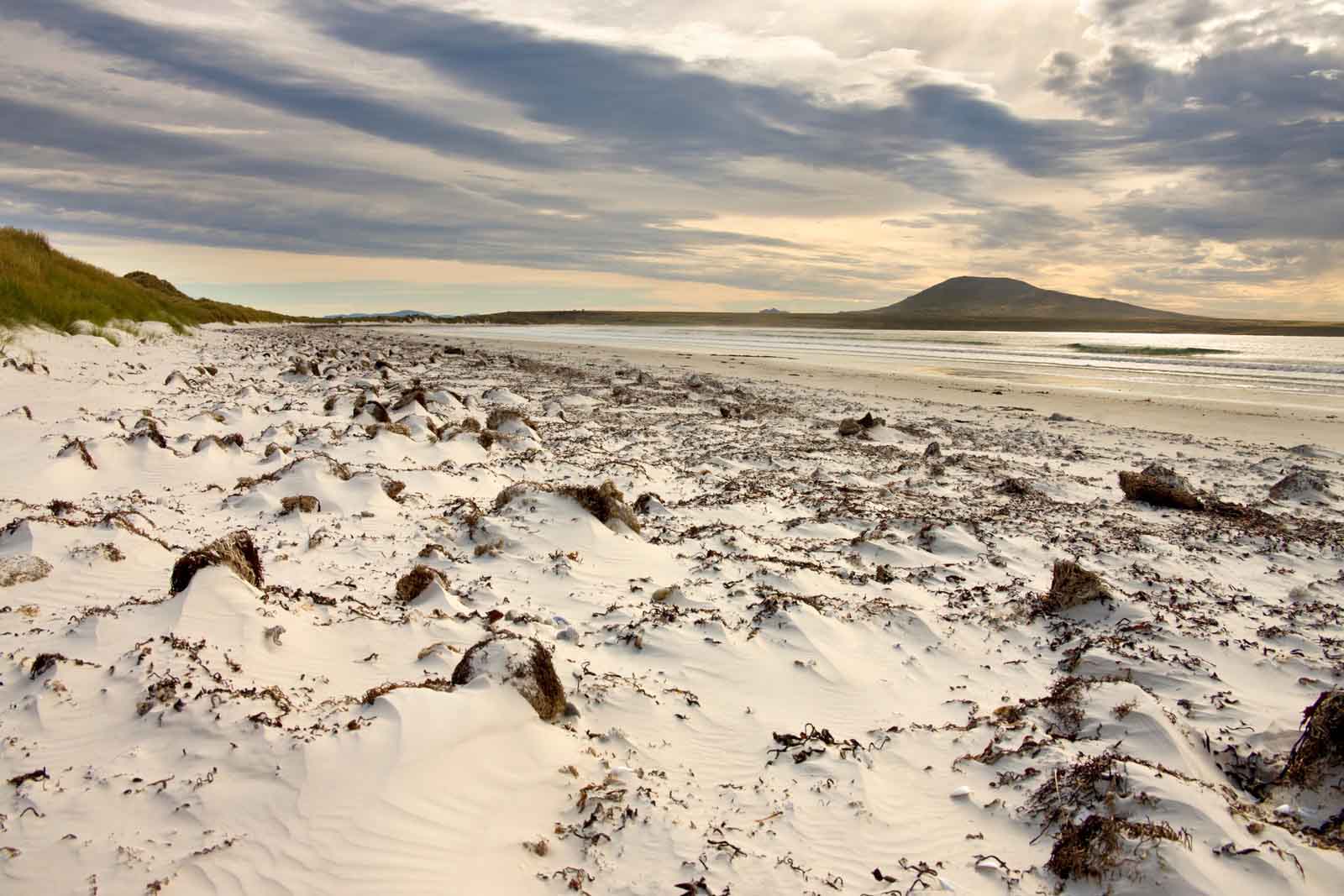
Yes, technically. Some itineraries swap the crossing for a flight, landing you on Antarctic ice without the maritime prelude. It’s efficient. It’s cleaner. It also skips something essential. Others loop through places like the Falklands or South Georgia, stretching the journey, postponing the inevitable until later. Those trips cost more, take longer, and still leave you facing the same water eventually, just from a different angle. There’s no true sidestep, only delay.
Choosing to fly is a practical decision, especially if your inner ear is known to revolt. But it compresses the experience. You miss the slow erasure of the familiar, the way smells change as you move south, the sound of wind sharpening. You arrive faster, yes, but less prepared. Antarctica doesn’t soften itself for your convenience. Neither does the ocean that guards it.
Ship Size and What It Means
Not all vessels are created equal down here. Larger ships dampen motion, their mass smoothing out the worst of the swell. Ships like Ultramarine are built for that kind of stability and reach, designed to push beyond familiar limits, offering space, comfort, and the ability to explore farther without constantly reminding you of the sea beneath. There is reassurance in that scale, in broad decks and calm interior spaces where the landscape unfolds at a measured distance.
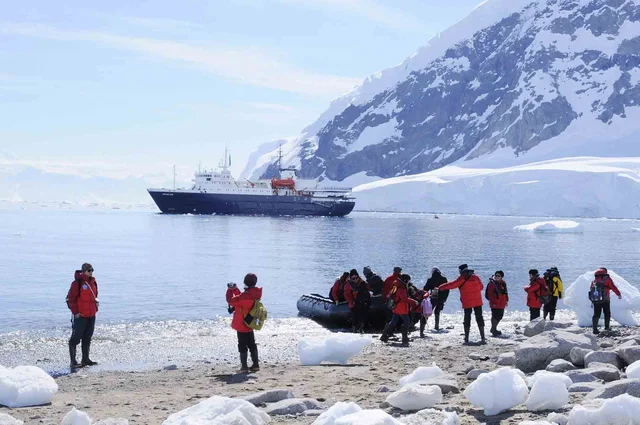
Still, size comes with a tradeoff: if there are more than 500 passengers onboard, no one steps foot on the continent. You watch from decks, wrapped in borrowed parkas, hands numb, while ice slides past at a dignified distance. It’s scenic. It’s detached.
 Antarctic Express: Fly the Drake | Voyagers Travel
Experience the thrill of flying over the Drake Passage to King George Island, and then explore the breathtaking Antarctic Peninsula by ship.
Request Santiago, San Pedro and Punta Arenas, Chile
Discover the vibrant culture of Santiago, marvel at San Pedro's Atacama wonders, and experience the breathtaking landscapes of Punta Arenas, with an optional An
Request
Smaller expedition ships feel more of everything. You hear the wind more clearly, feel the roll more honestly. Vessels like the Magellan Explorer are designed for closeness rather than separation, built to be agile and responsive in polar waters. You get closer to the ice, to the routines, to the people around you. The crews on these ships live for this work. They brief you nightly, voices steady, explaining what the water is likely to do while you sleep. They suggest when to take medication, not with alarm but with the confidence of repetition.
On ships this size, expedition capability and comfort don’t compete, they quietly coexist.

Preparing Your Body (and Ego)
Seasickness is not a moral failing. It doesn’t care how tough you think you are or how many ferries you’ve survived. Preparation starts before you board: a conversation with a doctor, pills tucked into pockets you can reach without standing. Onboard, the medical staff becomes quietly important, dispensing advice and reassurance that smells faintly of antiseptic and mint.
When the ship starts to move, the building responds. Elevators close. Decks are roped off. The gym goes dark. Lectures may pause, voices replaced by the steady hum of engines and the occasional clatter of a dropped mug. Meals continue. They always do. There’s comfort in that routine, in the warmth of soup, the taste of plain bread, the simple fact of sitting together while the world tilts.
When Plans Bend
The Drake doesn’t care about schedules. Storms roll through with little regard for your itinerary, and experienced crews respect that. Sometimes ships turn back, or wait, or adjust speed to catch a better window. It’s frustrating in the abstract and relieving in practice. No one wants heroics here. You feel the delay in your legs, restless from pacing corridors, in your ears popping with pressure changes.
These adjustments are part of the education. You learn that flexibility isn’t a slogan but a necessity. That safety briefings matter. That the ocean sets terms, not the other way around. By the time the swell eases, there’s often a collective exhale, a loosening of shoulders, laughter that sounds slightly surprised to be there.
Why Many Still Choose to Sail
For all the queasiness and inconvenience, there’s a reason seasoned travelers still recommend the crossing. The Drake forces you into proximity. You talk to people you might otherwise avoid. You recognize each other by the way you brace in doorways. Bonding happens over shared misery, yes, but also over shared learning. Safety drills. Lectures. The slow accumulation of context.
By the time Antarctica appears, silent, indifferent, smelling faintly of ice and salt, you’re not the same group that left port days earlier. You’ve been tuned to a different frequency. The crossing has stripped away some noise, some expectation. It hasn’t been as scary as advertised. It’s been something quieter, more instructive. A reminder that getting to the edge of the world should feel like work, at least a little.


Andre Robles
South America Travel Specialist
Credentials
- ✓Travel Writer
- ✓Voyagers Travel Contributor