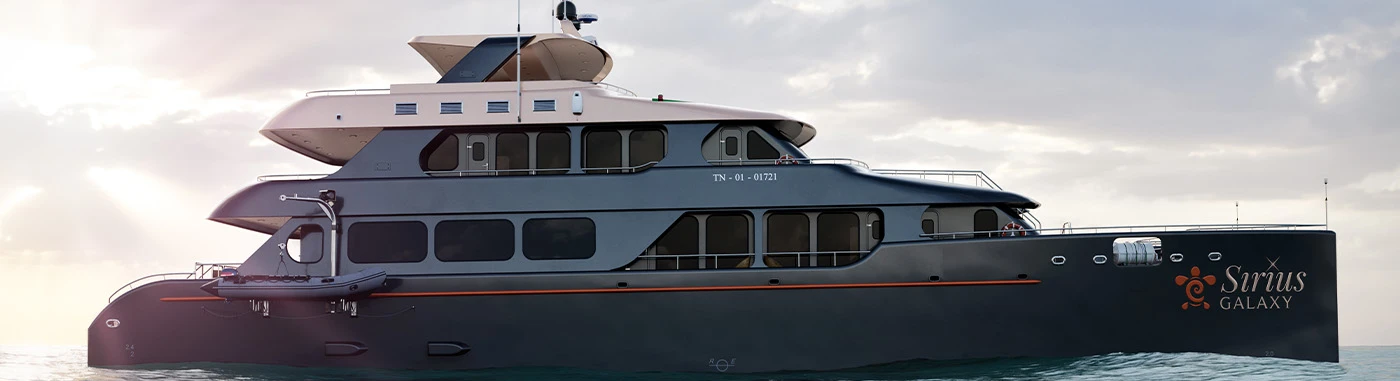
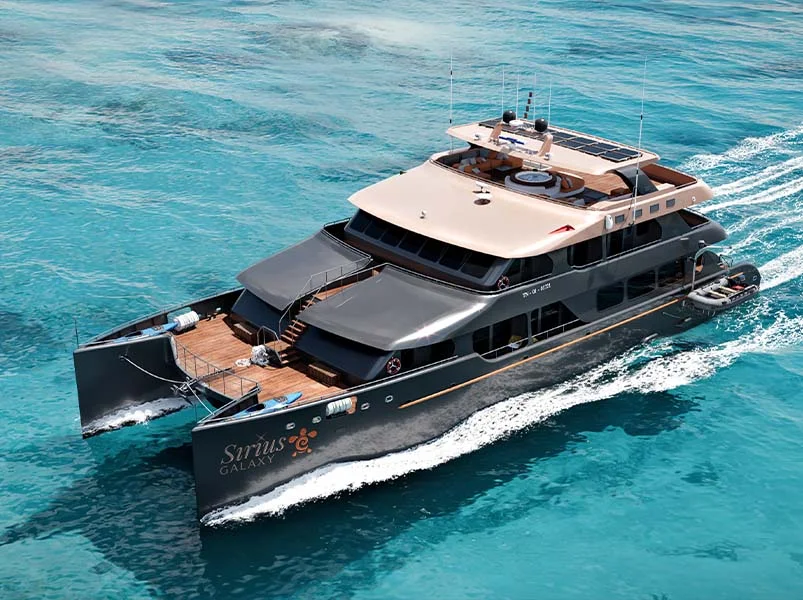
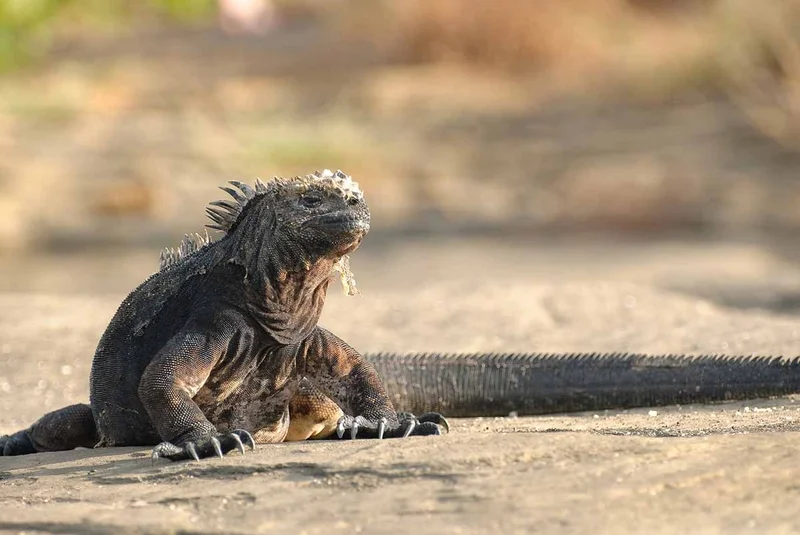
This itinerary is a cruise, which is not to be confused with an island-hopping trip where you stay in a hotel. Aboard the luxury catamaran Galaxy Sirius, travelers wake up somewhere new each morning. Itinerary B follows the western route through Santa Cruz, Isabela, Fernandina, and Santiago. This takes you to the wilder side of the archipelago, which has the youngest and most volcanic islands. Here, the cold Cromwell Current attracts penguins, flightless cormorants, and among the largest marine iguana colonies in the Galápagos.
What Six Days Actually Buys You
Six days give you four full days in the islands, plus two travel days. You spend those four days traveling to Fernandina and western Isabela. The shorter four- and five-day itineraries can’t reach these islands. If you’re coming here for the western islands and their endemic wildlife, six days is the shortest trip that makes sense. From USD 7,100 per person.
What This Cruise Costs, All In
The fare covers your cabin, all meals, guides, and excursions. Two costs are not included, which can catch first-time visitors by surprise. The Galápagos National Park entrance fee is US$200 per foreign adult, paid in cash when you arrive at the island airport. The US$20 Transit Control Card is also paid for in cash at the mainland airport before you fly. That’s about US$220 in mandatory fees before the actual cruise. You’ll also need to budget around US$400–500 per person for a round-trip flight from Quito or Guayaquil, with fares varying by season. Add these costs before comparing cruise prices. All operators charge these, and the fees must be paid in cash.
Want to see how this route compares with the other Galaxy Sirius itineraries, or explore a different trip length or format? Talk to one of our Galápagos advisors first. We have our own offices in Ecuador and can help match the boat and route to what you actually want to see.
Is a Six-Day Western Cruise Right For You?
Take this route if the western islands are the purpose of your visit. Fernandina and western Isabela are the highlights, but the shorter itineraries can’t reach them. If you’re more interested in the central or southern islands, or want to spend some of the trip on land, another Galaxy Sirius route or a land-and-cruise combination may be a better option. If you’re still unsure, tell us what you want to see. We’ll help you choose the right route.
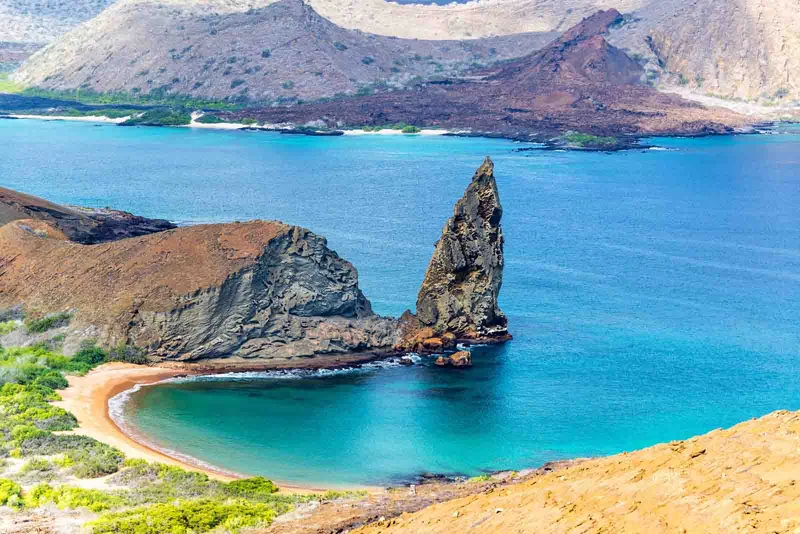
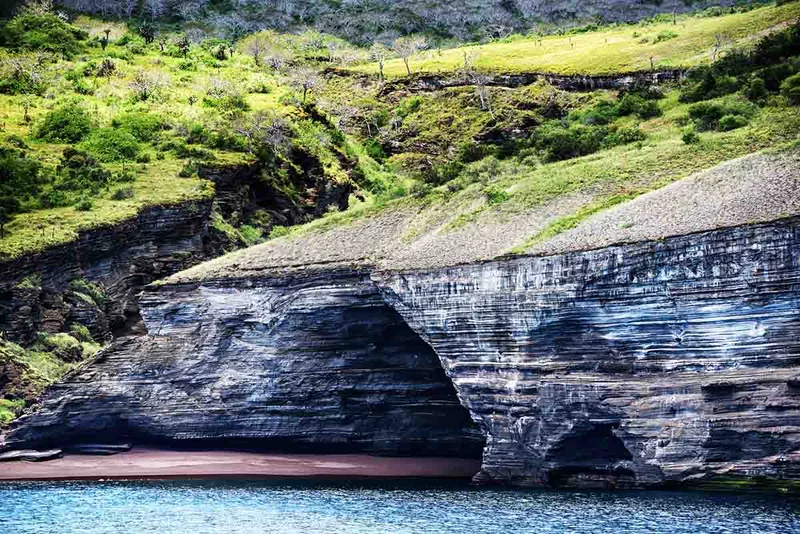
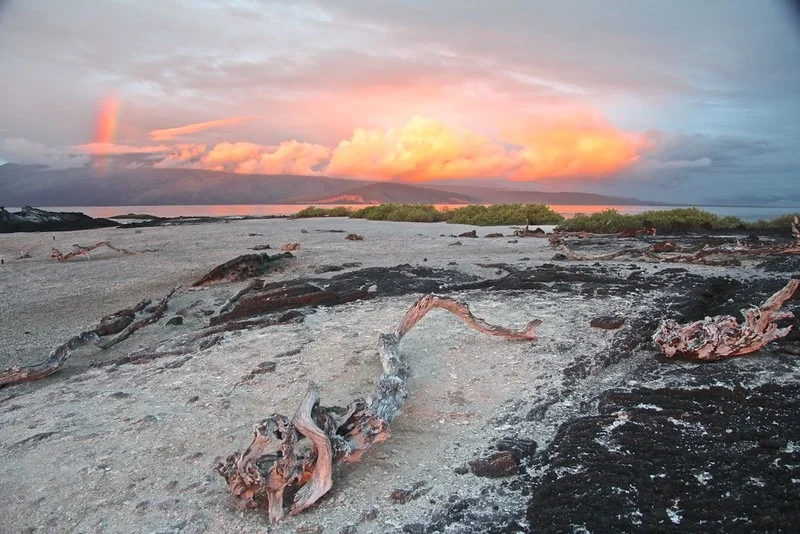
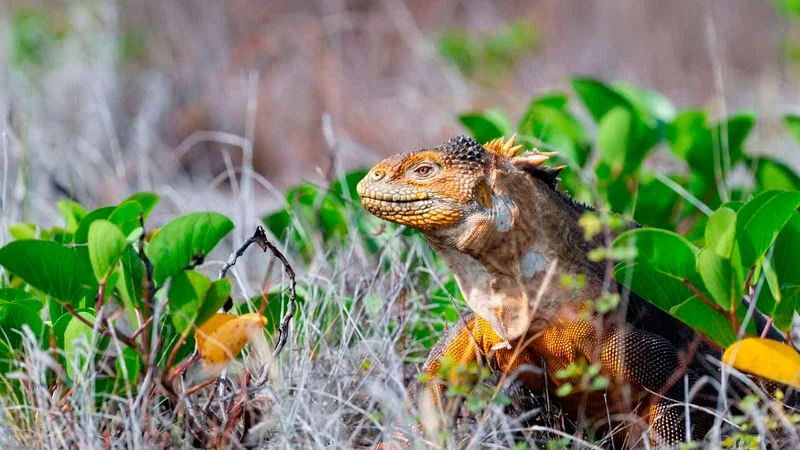
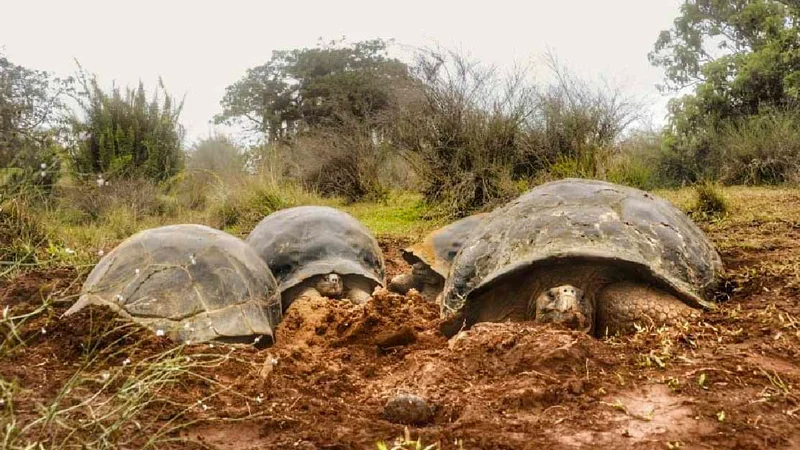
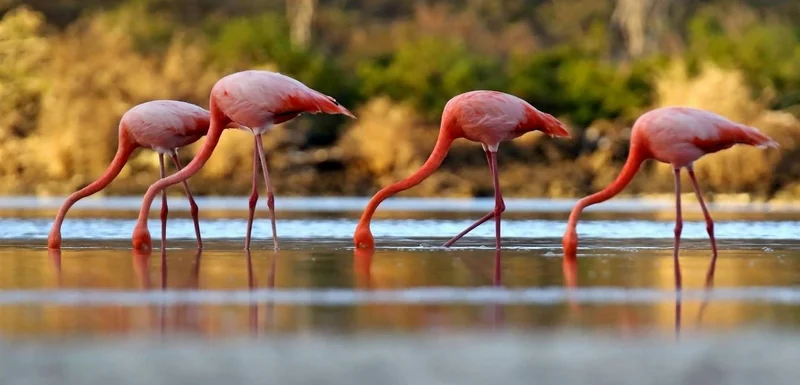
Galaxy Sirius’ Itinerary B covers the western Galápagos over six days. You’ll see giant tortoises in the Santa Cruz highlands, wildlife and lava fields around Isabela, and the volcanic landscapes of Urbina Bay and Tagus Cove. On Fernandina, Espinoza Point is home to marine iguanas and sea lions. On Santiago, you’ll visit Egas Port, Espumilla, and Buccaneer Cove, where you can see marine iguanas and Galápagos fur seals. You’ll also see the World War II remains at Albemarle Point and finish at Dragon Hill on Santa Cruz, known for land iguanas and flamingos.
6 Day Galapagos Itinerary
Day 1: Santa Cruz Island: Highlands
You fly to the Galápagos and land at Baltra, where your National Park-certified naturalist guide will meet you.
Highlands
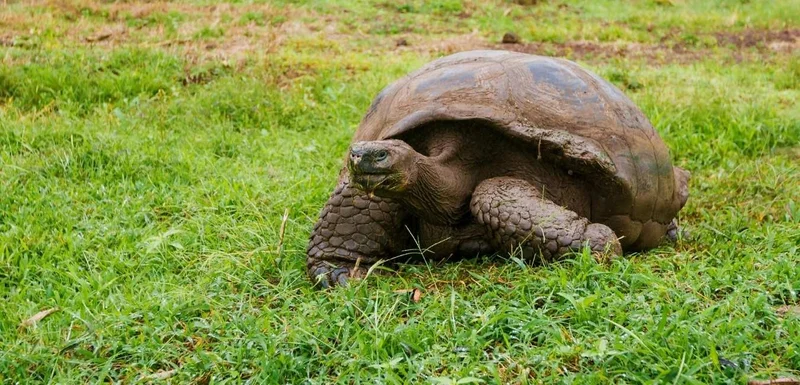
Whether you start from Baltra or Puerto Ayora, you’ll take a bus into the highlands and stop at one of the reserves. Here, you’ll walk through the green highland forests looking for giant tortoises in the wild. This is the best place in the Galápagos to see these gentle giants, grazing or resting near freshwater ponds. They can weigh more than 300 kg (600 pounds).
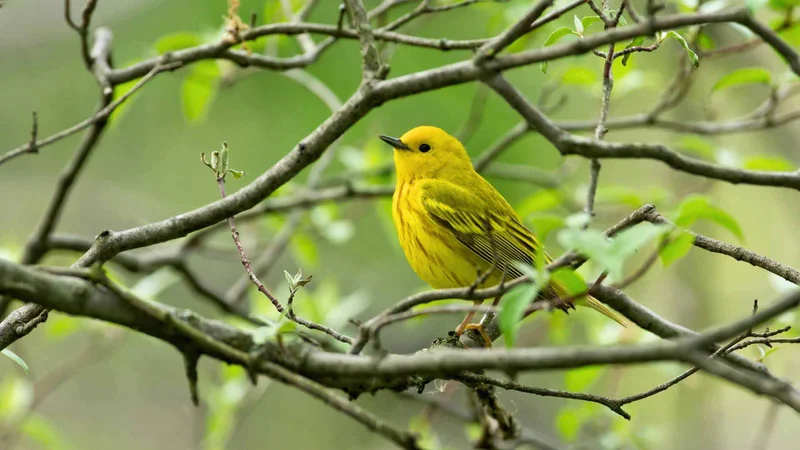
The highlands are also home to birds you’re less likely to see in the lowlands, including tree, woodpecker, and vegetarian finches, as well as flycatchers and several waterbird species. Depending on the itinerary, you may also visit a lava tunnel and learn how these formations were created by ancient volcanic eruptions.
Meals included: Lunch / Dinner
Day 2: Isabela Island: Moreno Point & Elizabeth Bay
Moreno Point
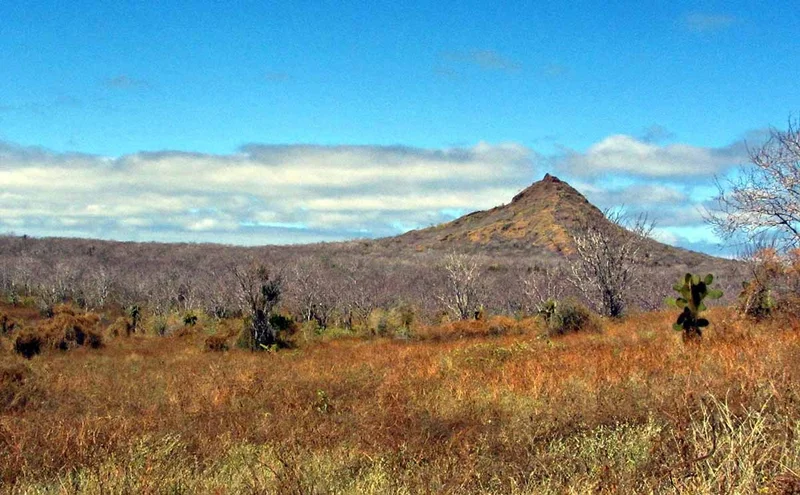
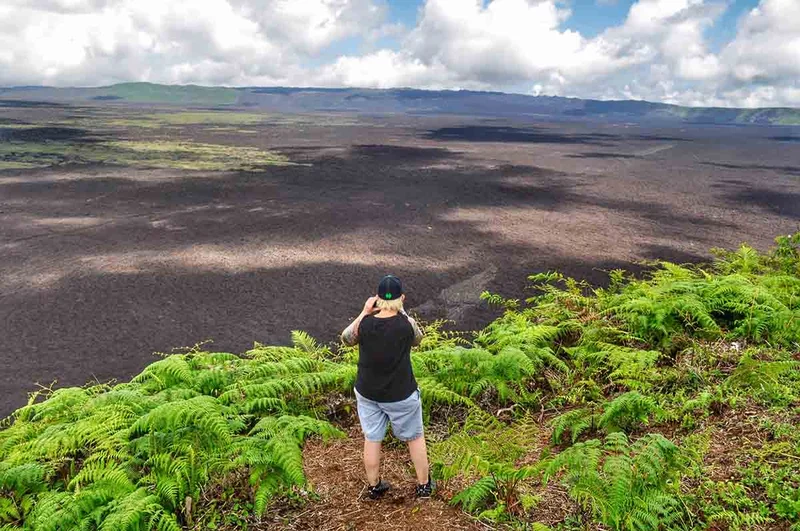
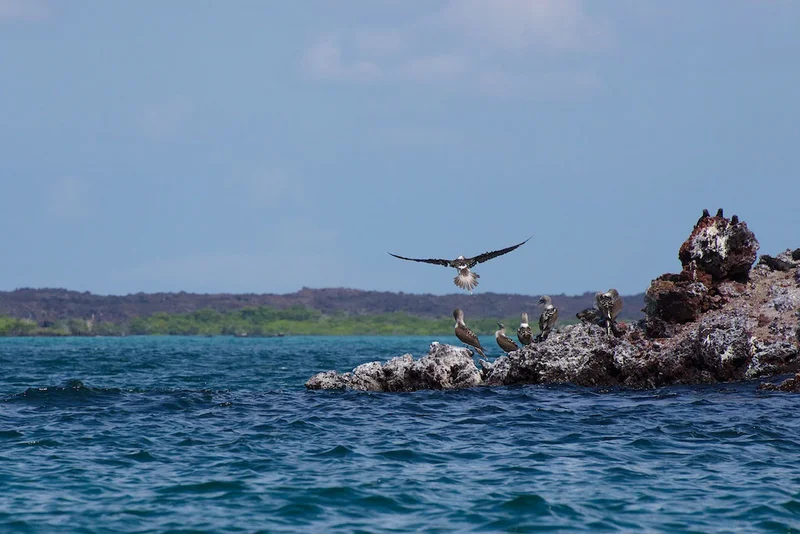
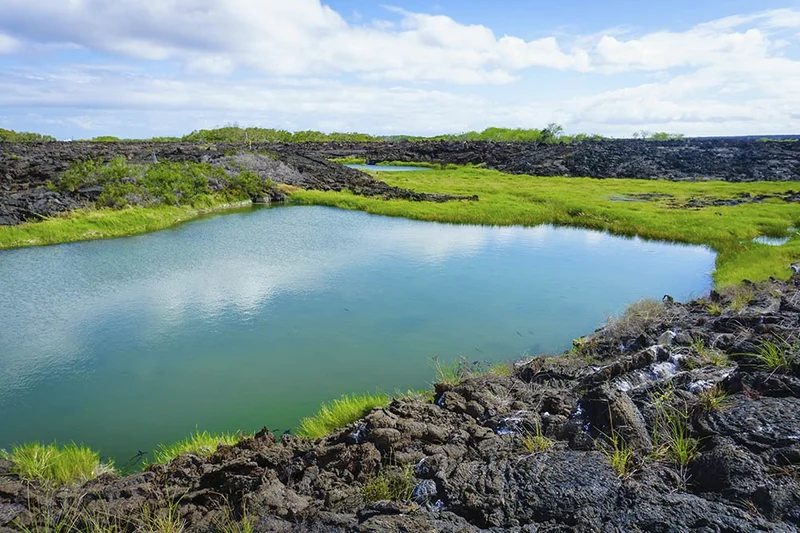
Moreno Point has wide lava fields that look almost lifeless at first. Further inland, brackish lagoons provide quiet pockets of life where you may see flamingos, gallinules, ducks, and herons. Along the coast, you will look for penguins, marine iguanas, flightless cormorants, blue-footed boobies, sea lions, oystercatchers, and other shorebirds.
Elizabeth Bay
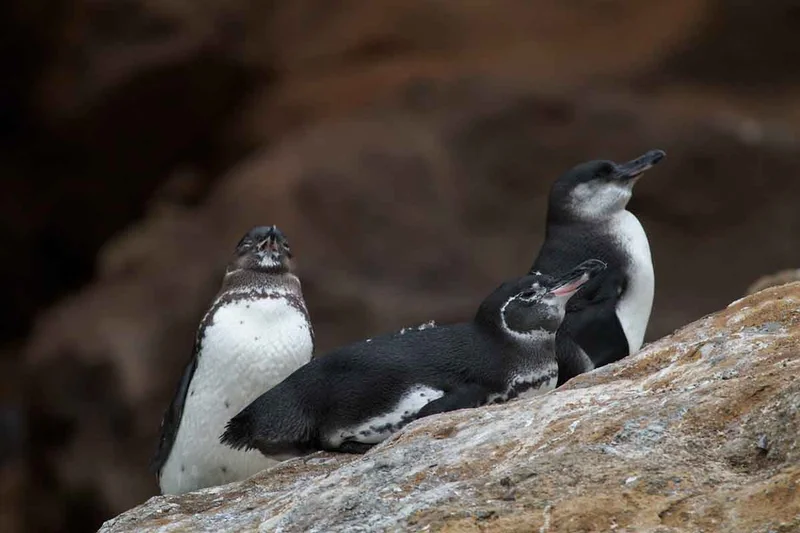
Elizabeth Bay is a sheltered bay surrounded by mangroves and dark lava fields. There’s no trail, so you’ll explore by dinghy, passing through channels, pools, and coves full of wildlife. It’s one of the best places in the islands to see Galápagos penguins, although sightings are usually of small groups rather than thousands. Flightless cormorants nest here, while blue-footed boobies and pelicans often fish in the shallow waters. Rays and sea turtles are also common.
Meals included: Breakfast / Lunch / Dinner
Day 3: Isabela Island: Urbina Bay & Tagus Cove
Urbina Bay
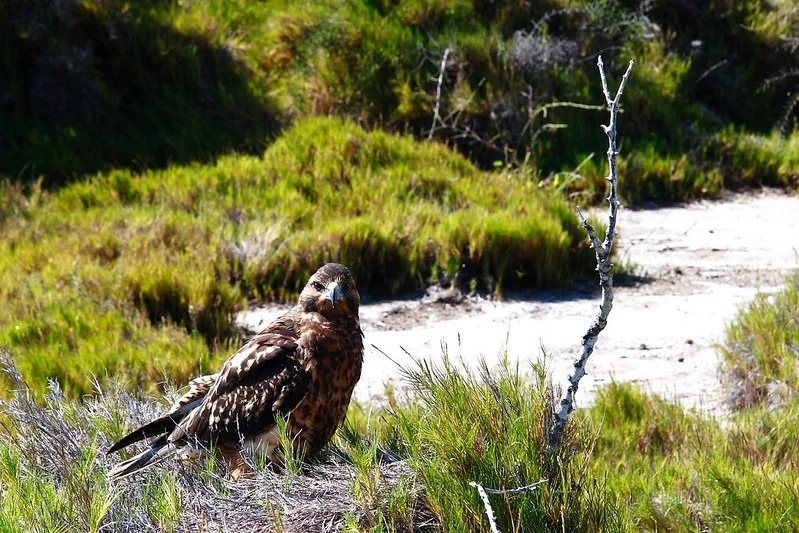
Urbina Bay is known for a dramatic uplift in the 1950s, when a large section of the coast rose above sea level and exposed land that had been underwater. Along the trail, you can still find small shells and pieces of coral left behind. The trail is also a good place to look for land iguanas and, at certain times of year, giant tortoises. Galápagos hawks nest here and are often seen flying overhead or perched in the trees.
Tagus Cove
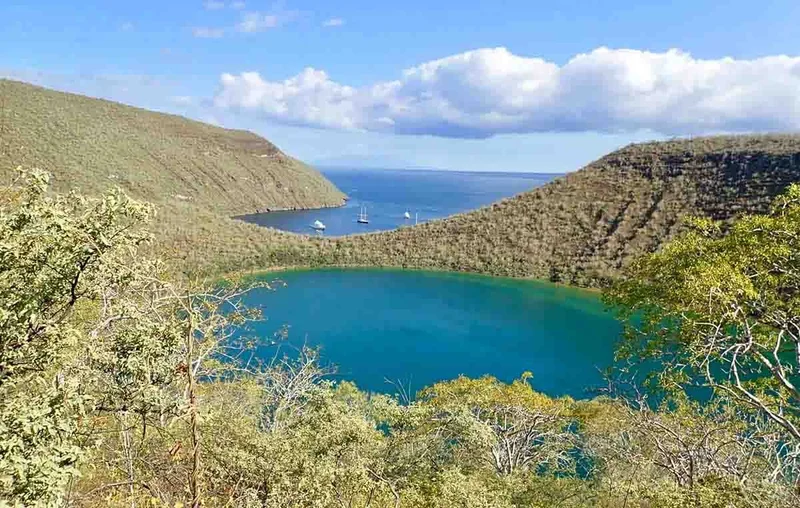
Tagus Cove was one of the places Charles Darwin visited during his Galápagos voyage. A trail leads through dry Palo Santo forest, where you can look for Darwin’s finches and mockingbirds. At the top, you’ll get views of Darwin Lake and the large volcanoes of northern Isabela. A boat ride along the coast gives you another chance to see penguins, cormorants, and marine iguanas. Keep an eye out for the Galápagos martin, a small endemic bird that is among the most endangered species in the islands.
Meals included: Breakfast / Lunch / Dinner
Day 4: Fernandina Island: Espinoza Point & Isabela Island: Albermarle Point
Fernandina Island: Espinoza Point
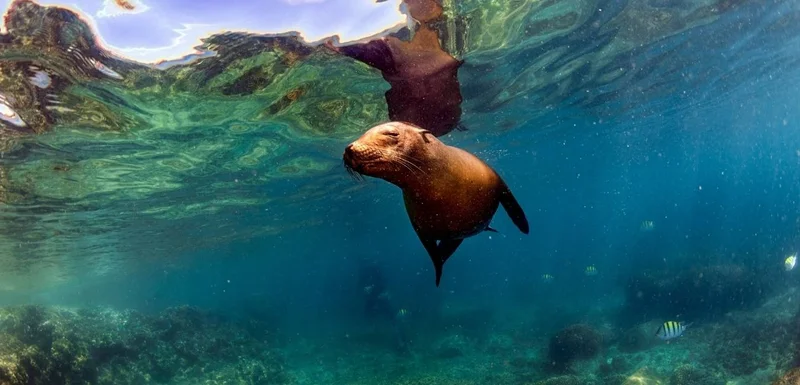
Espinoza Point sits at the base of Fernandina’s volcano (the archipelago’s most active) and is one of the standout sites in the Galápagos. Step ashore and you’ll quickly see why. Hundreds of marine iguanas gather here, making it one of the largest colonies of the species. Sea lions rest on the beaches, while their pups play in the tide pools. Along the shore, you’ll see flightless cormorants, which are found only in the western part of the archipelago. The cold, plankton-rich waters around Espinoza Point also support herons, pelicans, oystercatchers, sea turtles, shorebirds, and many other species. Look up into the mangroves, where Galápagos hawks often perch while watching for prey.
Isabela Island: Albemarle Point
Albemarle Point is both a wildlife site and a historical site. During World War II, the Americans built a radar base here to watch for Japanese ships approaching the islands. A few remains of the radar station can still be seen. The landscape is mostly barren lava, but the coast is full of life. You may see some of the largest marine iguanas in the Galápagos, along with Galápagos penguins, flightless cormorants, and shorebirds.
Meals included: Breakfast / Lunch / Dinner
Day 5: Santiago Island: Egas Port, Espumilla Beach & Caleta Bucanero
Egas Port
Despite its name, there is no actual port at Egas Port. You may see a few remains from the island’s last attempts at colonization in the 1960s. The trail follows the coast, where marine iguanas bask in the sun, and you can spot Galápagos sea lions, herons, oystercatchers, and other shorebirds. At the end of the trail, an area known as the Grottos is home to a small colony of endemic Galápagos fur seals. They are harder to see up close than Galápagos sea lions. Land iguanas were reintroduced to the area in 2019 after being absent from Santiago for more than a century, so keep an eye out for these impressive reptiles.
Espumilla Beach & Buccaneer Cove
Espumilla is a beautiful 1-km (0.6-mile) beach on the northern coast of Santiago, with distinctive rusty-brown sand. Large mangroves and native dry forest surround the beach, providing habitat for Galápagos hawks, finches, mockingbirds, and doves.
Don’t miss the salt pan, where flamingos and ducks may appear during the rainy season.
Meals included: Breakfast
Day 6: Black Turtle Cove or Daphne Mayor
At Black Turtle Cove, navigate by dinghy through a peaceful network of mangroves and shallow waters. This protected environment serves as an important refuge for marine species, and sightings may include sea turtles, different species of rays, and reef sharks.
Alternatively, visit Daphne Mayor, a small volcanic island rising dramatically from the sea. Its rocky cliffs and surrounding marine environment create an excellent setting for observing seabirds and experiencing the volcanic character of the Galapagos archipelago.
6 Day Galapagos Itinerary Includes
- Airport assistance
- Transfers in Galapagos
- Accommodation in double cabin
- All meals during the cruise
- Naturalist Bilingual Guide
- All visits & excursions according to the itinerary
- Snorkel Gear (mask, tube and fins)
- Kayaks, paddle boards
- Unlimited purified water, coffee and tea
- Wetsuits, soft drinks, beach towels
- Airport assistance
- Galapagos transfers
- Accommodation in a double cabin
- All meals during the cruise
- Bilingual naturalist guide
- All visits and excursions listed in the itinerary
- Snorkeling gear (mask, snorkel, and fins)
- Kayaks and paddleboards
- Unlimited purified water, coffee, and tea
- Wetsuits
- Soft drinks
- Beach towels
6 Day Galapagos Itinerary Does not Include
- Local flight to/from Galapagos
- Galapagos National Park Entrance fee
- Entrada al Parque Nacional Galápagos
- Alcoholic drinks
- Tips
- Local Taxes
- Travel Insurance
- Service do not specified
- Flights to and from the Galapagos
- Galapagos National Park entrance fee
- Alcoholic drinks
- Tips
- Local taxes
- Travel insurance
6 Day Galapagos Itinerary Highlights
- In the highlands, look for giant tortoises, Darwin’s finches, barn owls, white-cheeked pintails, and Galápagos flycatchers. You may also visit lava tunnels.
- Along the western coasts, you could see American flamingos, ducks, gallinules, cormorants, marine iguanas, Galápagos mockingbirds, sea turtles, rays, Galápagos penguins, and herons. Galápagos hawks, land iguanas, flycatchers, and Sally Lightfoot crabs are also found along the route.
- Other wildlife includes Galápagos sea lions, Galápagos fur seals, oystercatchers, shorebirds, and Galápagos doves.
- Read up on the islands this route visits: Santa Cruz, Isabela, Fernandina, and Santiago. From USD 7,100 per person.
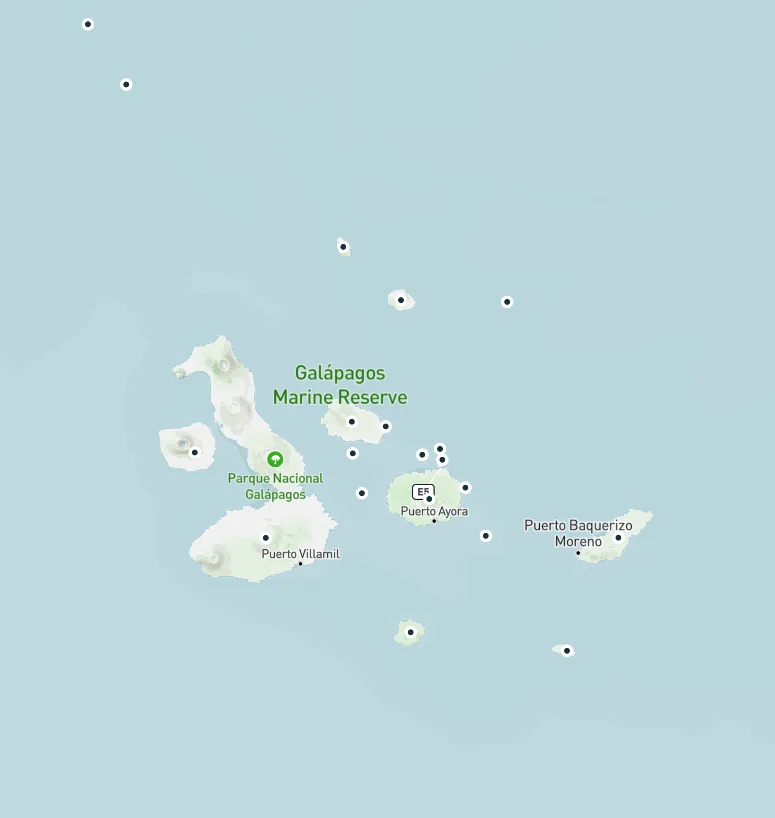
Itinerary Map
Dates & Promotions
Dates |
|---|
No data |
Animals you might see on this itinerary:
More information about the Galapagos Islands you visit in this 6 day itinerary:
6-Day Galapagos Cruise: Itinerary B - Galaxy Sirius Catamaran
A Note on the Western Route and Seasickness
Wildlife You're Likely To See
In the highlands, look for giant tortoises, Darwin’s finches, barn owls, white-cheeked pintails, and Galápagos flycatchers. You may also visit lava tunnels.
Along the western coasts, you could see American flamingos, ducks, gallinules, cormorants, marine iguanas, Galápagos mockingbirds, sea turtles, rays, Galápagos penguins, and herons. Galápagos hawks, land iguanas, flycatchers, and Sally Lightfoot crabs are also found along the route.
Other wildlife includes Galápagos sea lions, Galápagos fur seals, oystercatchers, shorebirds, and Galápagos doves.
Read up on the islands this route visits: Santa Cruz, Isabela, Fernandina, and Santiago.
From USD 7,100 per person.
A Note on the Western Route and Seasickness
Itinerary B covers the western islands. The crossings to Fernandina and back can be rougher. The cold, plankton-rich waters help support the area’s abundant wildlife, but you can also experience a bumpier ride. If you’re prone to motion sickness, come prepared. A catamaran’s twin hulls also tend to be steadier than a single-hull yacht of similar size. It’s a small trade-off for reaching one of the most remote and less-visited parts of the archipelago.
Itinerary B is one part of the Galaxy Sirius program. If the dates or trip length don’t work for you, browse the other Galaxy Sirius itineraries or our full range of Galápagos cruises. Filter by length, route, and format. You can also ask us to help find a boat that works with your schedule.
Frecuently Asked Questions
Is this an island-hopping tour or a cruise?
How much time do I actually get on the islands?
Why the western islands in particular?
What will the trip cost beyond the fare?
Will I get seasick on the western route?
Will I really see penguins?
Can I combine this with the mainland or another country?
Why travel with us?
 Over 22 years of experience
%20--%3e%3csvg%20version='1.1'%20id='Layer_1'%20xmlns='http://www.w3.org/2000/svg'%20xmlns:xlink='http://www.w3.org/1999/xlink'%20x='0px'%20y='0px'%20viewBox='0%200%20512%20512'%20style='enable-background:new%200%200%20512%20512;'%20xml:space='preserve'%3e%3cg%3e%3cg%3e%3cpath%20d='M424.18,200.763c-1.558,0-3.124,0.043-4.685,0.125c-20.129-42.954-56.688-76.736-101.546-93.182V64%20c0-34.157-27.79-61.947-61.947-61.947c-34.157,0-61.947,27.79-61.947,61.947v43.707c-44.86,16.447-81.419,50.231-101.548,93.186%20c-1.56-0.083-3.125-0.129-4.685-0.129C39.396,200.763,0,240.16,0,288.583c0,5.633,4.566,10.199,10.199,10.199h66.648%20c4.678,39.071,21.888,74.34,47.486,101.669c-9.018,15.386-13.176,33.319-11.773,51.284c1.626,20.824,10.666,40.436,25.454,55.225%20c1.992,1.992,4.602,2.987,7.212,2.987s5.221-0.995,7.212-2.987l55.753-55.753c15.234,4.19,31.263,6.441,47.809,6.441%20c17.145,0,33.738-2.405,49.461-6.893l56.205,56.205c1.992,1.992,4.602,2.987,7.212,2.987c2.61,0,5.221-0.995,7.212-2.987%20c14.789-14.789,23.828-34.403,25.454-55.229c1.444-18.5-3.024-36.957-12.609-52.643c24.899-27.134,41.617-61.883,46.218-100.306%20h66.649c5.633,0,10.199-4.566,10.199-10.199C512,240.16,472.604,200.763,424.18,200.763z%20M75.551,277.199%20c0,0.397,0.012,0.789,0.015,1.185H21.168c4.765-31.266,31.086-55.537,63.273-57.134C78.68,238.873,75.551,257.677,75.551,277.199z%20M214.452,64c0-22.909,18.638-41.549,41.548-41.549S297.549,41.09,297.549,64v37.587c-13.345-3.157-27.253-4.835-41.549-4.835%20c-14.295,0-28.204,1.679-41.548,4.835V64z%20M120.411,362.142c-15.487-24.634-24.462-53.757-24.462-84.942%20c0.001-31.989,9.439-61.81,25.669-86.84l22.637,22.637c1.992,1.992,4.602,2.987,7.212,2.987s5.221-0.995,7.212-2.987%20c3.983-3.983,3.983-10.441,0-14.425l-24.755-24.756c29.381-34.641,73.201-56.669,122.075-56.669%20c48.875,0,92.694,22.028,122.075,56.669l-42.909,42.909l-68.966-39.817v-11.484c0-5.633-4.566-10.199-10.199-10.199%20c-5.633,0-10.199,4.566-10.199,10.199v11.484l-76.655,44.257c-3.156,1.822-5.1,5.188-5.1,8.833v88.508L120.411,362.142z%20M145.763,484.786c-15.009-20.324-17.359-47.248-6.136-69.797c14.036,11.873,29.899,21.646,47.107,28.826L145.763,484.786z%20M246.835,436.98c-45.946-2.606-86.773-24.675-114.332-58.082l42.362-42.362l71.97,41.552V436.98z%20M184.444,318.512v-82.625%20L256,194.574l71.556,41.313v82.625L256,359.825L184.444,318.512z%20M267.234,436.849v-59.957l69.244-39.979l42.545,42.545%20C351.888,412.049,312.077,433.724,267.234,436.849z%20M368.341,484.788l-41.594-41.594c17.233-7.373,33.095-17.35,47.087-29.439%20C385.773,436.55,383.627,464.09,368.341,484.788z%20M391.19,362.777l-43.236-43.236v-86.753l42.428-42.428%20c16.23,25.029,25.668,54.851,25.668,86.839C416.05,308.652,406.925,338.011,391.19,362.777z%20M436.434,278.384%20c0.003-0.396,0.015-0.789,0.015-1.185c0-19.522-3.129-38.326-8.891-55.949c32.187,1.597,58.508,25.869,63.273,57.134H436.434z'/%3e%3c/g%3e%3c/g%3e%3cg%3e%3cg%3e%3cpath%20d='M256,125.212c-5.633,0-10.199,4.566-10.199,10.199v2.07c0,5.633,4.566,10.199,10.199,10.199%20c5.633,0,10.199-4.566,10.199-10.199v-2.07C266.199,129.778,261.633,125.212,256,125.212z'/%3e%3c/g%3e%3c/g%3e%3cg%3e%3c/g%3e%3cg%3e%3c/g%3e%3cg%3e%3c/g%3e%3cg%3e%3c/g%3e%3cg%3e%3c/g%3e%3cg%3e%3c/g%3e%3cg%3e%3c/g%3e%3cg%3e%3c/g%3e%3cg%3e%3c/g%3e%3cg%3e%3c/g%3e%3cg%3e%3c/g%3e%3cg%3e%3c/g%3e%3cg%3e%3c/g%3e%3cg%3e%3c/g%3e%3cg%3e%3c/g%3e%3c/svg%3e "South America & Antarctica Specialists") South America & Antarctica Specialists
South America & Antarctica Specialists Set and Tailor-made packages
 The best last-minute cruise deals
%20--%3e%3csvg%20version='1.1'%20id='Capa_1'%20xmlns='http://www.w3.org/2000/svg'%20xmlns:xlink='http://www.w3.org/1999/xlink'%20x='0px'%20y='0px'%20viewBox='0%200%20489.679%20489.679'%20style='enable-background:new%200%200%20489.679%20489.679;'%20xml:space='preserve'%3e%3cg%3e%3cg%3e%3cg%3e%3cpath%20d='M487.768,218.844c-14.5-134.2-135.2-232-269.4-217.4c-72.9,8.3-137.4,47.8-179,109.2c-6.2,9.4-3.1,21.8,6.2,28.1%20s21.8,3.1,28.1-6.2c34.3-51,88.4-84.3,148.8-90.5c112.4-11.5,213.3,69.6,224.7,182c11.4,111.3-69.7,212.2-181,223.7%20c-74.7,7.9-147.5-26-189.5-86.8l39.7,8.7c10.4,2.1,21.8-4.2,23.9-15.6c2.1-10.4-4.2-21.8-15.6-23.9l-81.1-17.7%20c-17.3-2.2-23.9,10.4-25,15.6l-17.7,82.2c-2.1,10.4,4.2,21.8,15.6,23.9c13.6,1.1,21.8-7.3,25-16.6l6-27.1%20c89.3,115.2,214.6,98.9,222.9,97.9C404.568,473.744,502.368,353.044,487.768,218.844z'/%3e%3c/g%3e%3cg%3e%3cpath%20d='M171.168,268.944h-38l30.6-31.1c0.4-0.4,0.8-0.8,1.1-1.3c5.7-7.5,8.8-16.5,8.8-26c0-23.7-19.3-43-43-43s-43,19.3-43,43%20c0,7.4,6,13.4,13.4,13.4s13.4-6,13.4-13.4c0-8.9,7.2-16.1,16.1-16.1c8.9,0,16.1,7.2,16.1,16.1c0,3.3-1,6.5-2.9,9.2l-52.4,53.3%20c-3.8,3.9-4.9,9.6-2.8,14.6s7,8.2,12.4,8.2h70.1c7.4,0,13.4-6,13.4-13.4S178.568,268.944,171.168,268.944z'/%3e%3cpath%20d='M271.668,240.144h-6.1v-59.2c0-5.7-3.5-10.7-8.9-12.6c-5.3-1.9-11.3-0.3-14.9,4l-60.4,72.6c-3.3,4-4,9.6-1.8,14.3%20c2.2,4.7,6.9,7.7,12.2,7.7h47v15.4c0,7.4,6,13.4,13.4,13.4c7.4,0,13.4-6,13.4-13.4v-15.4h6.1c7.4,0,13.4-6,13.4-13.4%20C285.068,246.144,279.068,240.144,271.668,240.144z%20M238.668,240.144h-18.4l18.4-22.1V240.144z'/%3e%3cpath%20d='M344.068,212.044c-6.6,0-12.9,1.4-18.5,4v-35.1c0-7.4-6-13.4-13.4-13.4s-13.4,6-13.4,13.4v101.4c0,7.4,6,13.4,13.4,13.4%20s13.4-6,13.4-13.4v-24.9c0-10.2,8.3-18.5,18.5-18.5s18.5,8.3,18.5,18.5v24.9c0,7.4,6,13.4,13.4,13.4s13.4-6,13.4-13.4v-24.9%20C389.468,232.444,369.068,212.044,344.068,212.044z'/%3e%3c/g%3e%3c/g%3e%3c/g%3e%3cg%3e%3c/g%3e%3cg%3e%3c/g%3e%3cg%3e%3c/g%3e%3cg%3e%3c/g%3e%3cg%3e%3c/g%3e%3cg%3e%3c/g%3e%3cg%3e%3c/g%3e%3cg%3e%3c/g%3e%3cg%3e%3c/g%3e%3cg%3e%3c/g%3e%3cg%3e%3c/g%3e%3cg%3e%3c/g%3e%3cg%3e%3c/g%3e%3cg%3e%3c/g%3e%3cg%3e%3c/g%3e%3c/svg%3e "Galapagos trips") 24/7 Customer service during your trip
24/7 Customer service during your trip Multi-Destination packages
Similar Itineraries