Kyrgyz Climbers Scale Fitz Roy and BASE Jump Near Summit | Travel News
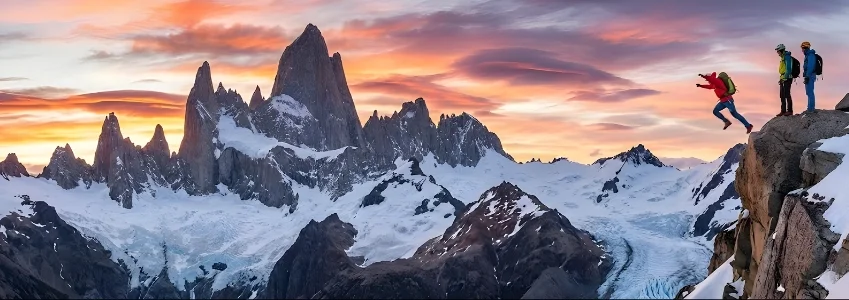
Three climbers from Kyrgyzstan climbed Argentina’s Mount Fitz Roy in early January and then launched what they describe as a BASE jump from near the top of the peak inside Patagonia’s Los Glaciares National Park.
Boris Egorov, Vladimir Murzaev, and Konstantin Yaemurd, who call themselves the "Dirty Climbers" made the ascent on January 7 before filming their parachute exit. Egorov told Outside the draw was the combination of exploration, uncertainty, and the commitment required to carry out an idea that had taken years of preparation.
Mount Fitz Roy rises to 11,171 feet and has a reputation among mountaineers as a difficult objective. For this attempt, the trio chose a steep, technical line known as the Royal Flush, a route whose name, the American Alpine Club notes, alludes to the risk-and-reward logic of gambling.
Why they picked the Royal Flush route
The team’s plan hinged on finding a section of the climb that could function as a safe exit. They selected Royal Flush because its vertical portion leads to a point they believed could work for a jump, tying the climbing objective directly to the BASE component rather than treating it as an afterthought.
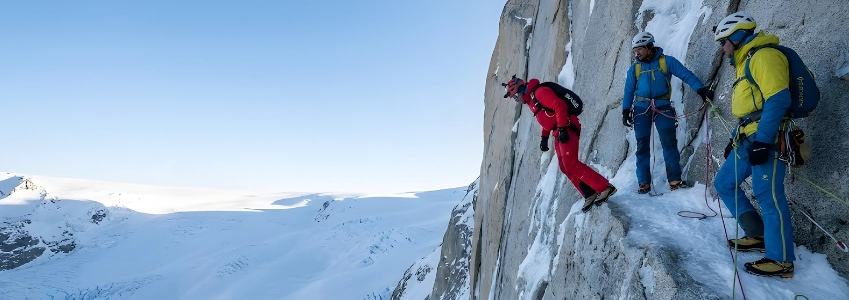
The approach raised the stakes. Along with hardware for a multi-day wall, they hauled camping supplies and parachute systems. On an exposed, technical route, that added weight meant less margin for mistakes, especially in cold conditions high above Patagonia’s broad ice fields.
Weather window and the jump itself
Patagonia’s weather was a central variable. Egorov said the group needed a clean forecast not just to climb, but to time their parachute exit under conditions suitable for BASE jumping, standards that can be stricter than what is merely acceptable for a summit push.
They waited in a nearby village until the window opened, then committed to the wall for three days. Egorov described exhaustion and cold building toward the top of the route, with relief replacing adrenaline as the dominant emotion just before the jump, an endpoint to the strain of the climb.
In the end, the trio did not launch from the mountain’s true summit. Egorov said they climbed the full vertical section and, after their third camp, woke close to the exit point, roughly 1,000 feet below the top. With the weather holding, they chose not to continue upward through a complicated stretch of easier terrain, judging the added movement to be unnecessary risk.
Egorov described the most intense moment as the quiet just before leaving the ledge, after the other two had already jumped and landed. Alone at the exit, he said, the final seconds were the most rewarding part of the sequence.
 Argentinean Patagonia | 10 Days | Voyagers Travel
Embark on a thrilling 10-day journey through Argentinean Patagonia, exploring Buenos Aires, majestic glaciers, diverse wildlife, and experiencing a vibrant Tang
Request
The jump took place within Los Glaciares National Park, where, according to the account, BASE jumping is not allowed. The Patagonia Online Climbing Guide is described as noting a gray area in enforcement and permitting, while Egorov said jumpers do still make exits inside the park.
Asked whether they would return, Egorov said yes, possibly next year.